GW Wins Contract to Develop Antidote-Bearing Organisms to Protect Against Biological, Chemical Threats

GW researchers will use CRISPR/Cas9 technology to genetically modify commensal organisms to help neutralize threats experienced by warfighters and first responders

The George Washington University School of Medicine and Health Sciences researchers have been awarded a $3.6 million contract to genetically modify commensal organisms to produce antidotes for harmful biological and chemical agents, such as anthrax, Ebola, and even COVID-19.

Latest News

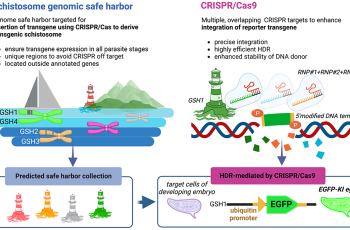
A heritable CRISPR knock-in in Schistosoma mansoni, a human blood fluke, generated a transgenic line that secreted a functional anti–SARS-CoV-2 antibody into the bloodstream of infected mice. Antibodies in the mice’s sera neutralized the virus, demonstrating the potential of engineered schistosomes…
Dr. Michael I. Bukrinsky, a Professor in GW's Department of Microbiology, Immunology, and Tropical Medicine, has co-authored a new review titled "Maladaptive trained immunity in viral infections" that was published in the Journal of Clinical Investigation (JCI).
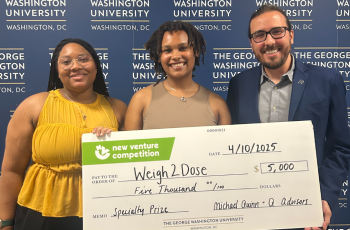
Congratulations to Paprika Berry, Pedro Gazzinelli and Jada Covington (a PhD student in the IBS program - former rotating student) from the Gazzinelli lab, for advancing to the Top 5 in the GW New Venture Competition in the Healthcare track! Their innovative project, Weigh2Dose, also earned them…